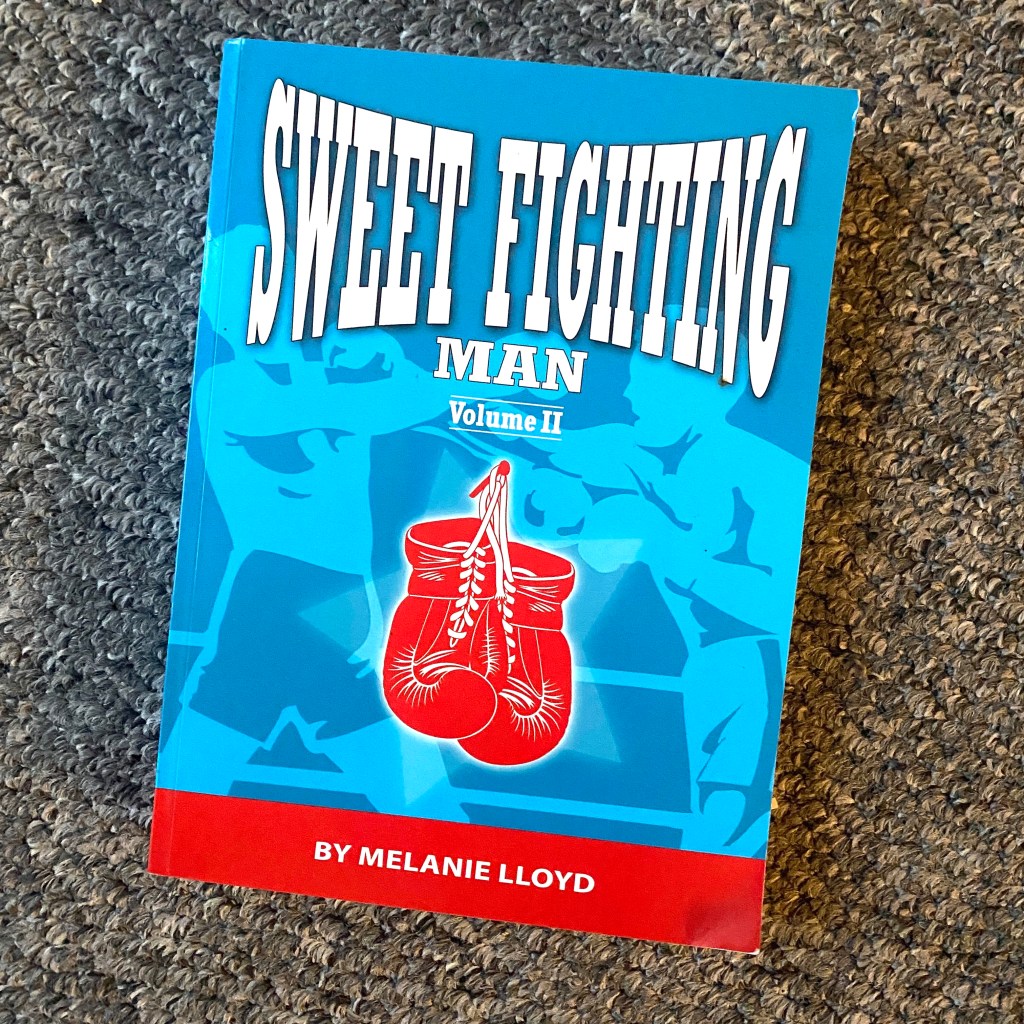
‘Sweet Fighting Man – Volume 2’ is the second instalment of Melanie Lloyd’s ‘Sweet Fighting Man’ series of interview-format books, in which she assembles self-recorded conversations with a selection of British professional boxers.
Volume 2 features the following boxers:
- George Cooper: The twin brother of British icon Henry is given the chance to talk at length about his own life and career, very much with the intention of highlighting his own (albeit modest) achievements as a boxer. As an opening interview it is an excellent signifier of Lloyd’s intentions with this project, namely to shine a light on those dedicated professional fighters who are so important to the fabric of the sport/business but who, all-too-often, are ignored or forgotten about by the majority of the media reporting on the game.
- Clinton McKenzie: A fascinating insight into the drama surrounding McKenzie’s (eventual) selection for the 1976 Montreal Olympic Games. I was completely unaware of the underhanded behaviour which so nearly saw the reigning ABA champion missing out on representing his country, on the biggest amateur stage. It was also great to read of McKenzie’s joy in winning his Lonsdale belt outright.
- Ted ‘Kid’ Lewis: Always great to read the thoughts and memories of a legend of the sport.
- Bob Williams: Again, this chapter highlights Lloyd’s determination to recognise the contribution of less-recognised boxers. The chapter also, brilliantly, underlines the importance of friends, family and workmates when it comes to ticket sales in the early stages of a boxer’s career. There is a great story of Williams having to drive drunk friends home from a venue after a tough night of boxing. Williams also talks of the importance of area titles to boxers at the level he competed at – often they are the pinnacle of a boxer’s career.
- Michael Sprott: The former heavyweight talks about his trilogy of fights with Danny Williams, and winning the European title in Germany.
- Mark Rowe: Lloyd didn’t know of Rowe before interviewing other boxers. I really like that fact that she admitted to this, and the fact that his story was a revelation to her. Too often authors ‘hide’ behind their own research, only covering subjects they are familiar with, and giving off an air that every published writer is an expert in their field.
What this admission also highlights is the enthusiasm and joy Lloyd has for discovering boxers new to her. It’s easy to see what has drawn her to this interview project: she clearly loves talking to fighters and spending time in their company. - Jane Couch: One of the few interviews I’ve read with this pioneer of British women’s professional boxing. I find it strange that Couch gets so little recognition for not taking ‘no’ for an answer, and taking legal action in 1998 against the British Boxing Board of Control, in order to become the first licensed professional female boxer in Britain.
Though this may have been due in part to the fact that, once licensed, she had to ply her trade in America because of a lack of opportunities in this country. There are some sad reflections on the state of boxing and the print media in the early 2000s, with journalists frequently asking to spar with Couch as a promotional stunt, and how both Lloyd and Couch were still barred from attending the male-only Boxing Writers annual dinner/awards, at the point of their conversation in 2004.
Couch is clearly an enormously driven person, and the women currently enjoying the boom in the sport, and its attendant earning opportunities, owe a huge amount to this trailblazer. - Ivor ‘The Engine’ Jones: In what now seems like a throwback to another era, Jones found his way into boxing while apprenticed as a jockey in Newmarket. As was common at the time, apprentices were encouraged to box as part of keeping in shape. A side note about this interview: His fans seemed like a bloody handful, always keen to voice their disproval at what they viewed as bad decisions and occasionally smashing the gaff up, following Jones in great numbers as both an amateur and a professional.
- Tony Booth: A journeyman who finished his career after competing in 166 bouts, with a record of 52-105-9. While there are a number of British fighters I could name here with over 100 hundred bouts on their records, and several topping 150, there aren’t any who come close to matching Booth’s win total of 52. For boxers who play the important role of providing essential experience to ‘prospects’ while balancing on that fragile line of ‘knowing they are not there to win’, it seems remarkable that Booth could enjoy such a long career when he was obviously so keen on upsetting the ‘natural order’. Surely, a record like his won’t be seen again?
- Colin Jones: The Welsh welterweight who fought for world titles against Milton McCrory (twice) and Donald Curry talks about his career and the (long) list of boxers he’s faced, and between whom there is ‘no love lost’. Jones touches on the heat and tension resulting from regional rivalries, and how important it was for him and other boxers of the same nationality to first ‘sort out’ who the best fighters were in Wales, before anyone started to consider Britain or further afield.

 Writers on Boxing
Leave a reply to #106: ‘Sweet Fighting Man: Ring of Truth’ by Melanie Lloyd – Writers on Boxing Cancel reply