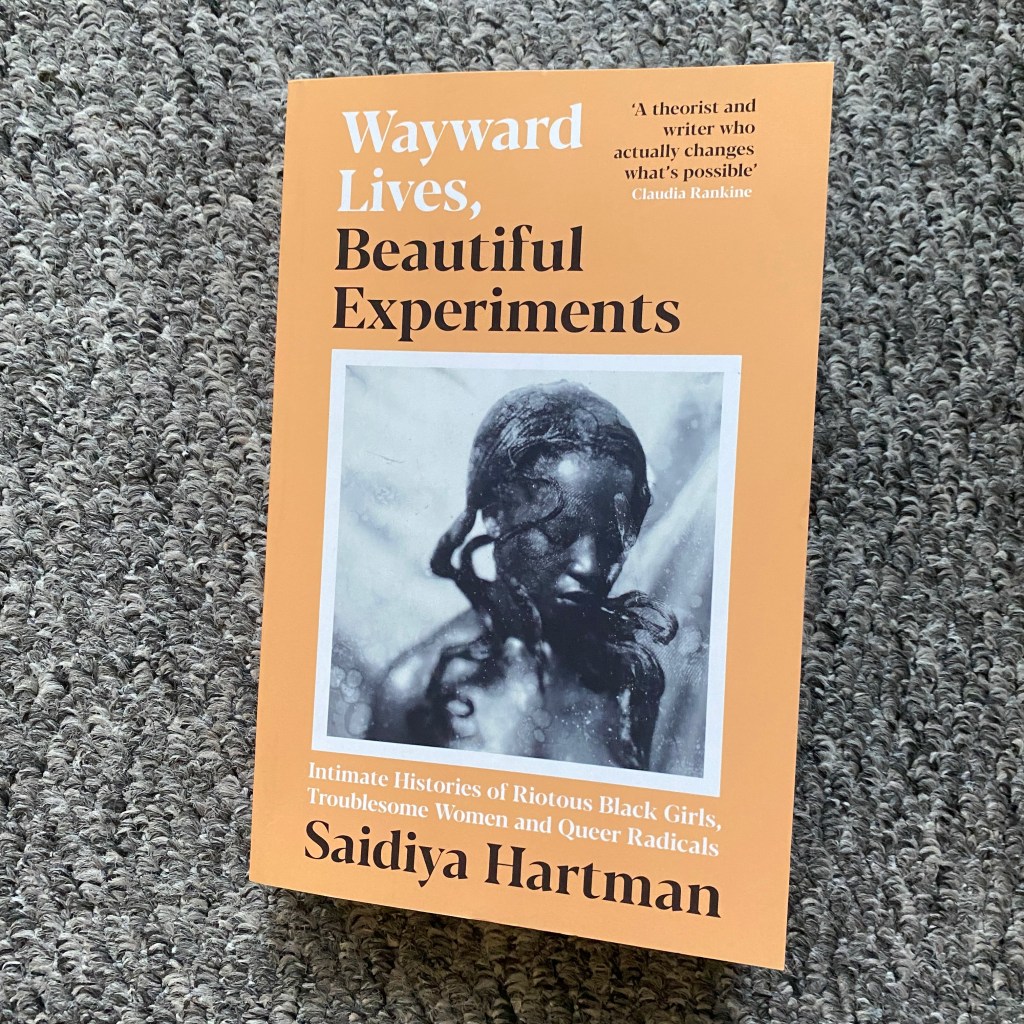
In ‘Wayward Lives, Beautiful Experiments’, Saidiya Hartman uses extensive research of a range of archival materials to expand, retell and imagine the lives of black women born in America in the early twentieth century – the first generation after emancipation.
I came across this book as it’s on the reading list of my current module on my creative writing MA course. We’re currently looking at ways of ‘writing the self’ – approaches to memoir, (auto)biography and auto-fiction. This book is a fantastic example of how historic records can be (re)interpreted in order to tell the stories of forgotten and ignored peoples.
I wanted to post about this book because of a very minor (and even inconsequential) mention of a boxer, as I think it could be of interested to people, no matter how brief it is. One of the characters (or ‘chorus members’) in the book is a young woman called Eva Perkins, who ends up incarcerated at the Bedford Hills facility for women during the 1910s. While there she suffers, like many other black and brown women, from inhumane and abusive treatment by the staff.
Part of the archival material which Hartman draws on to tell Eva’s story is letters from her husband, Aaron Perkins, who at times lists his occupation as ‘boxer’. He apparently went by the ring (and street) monikers of Kid Chocolate and Kid Happy, both extremely common on the streets of Harlem at the time, making it hard to trace his ring career. Though due to him only occasionally referring to himself as a boxer probably means that he didn’t have an extensive career, and used any fights he had as a way of supplementing his income at a time when unemployment was at very high levels for young black men. Because of this I think this listing on Boxrec.com, for a featherweight out of Harlem, New York using the name Kid Happy, is a good candidate.
Of course, it was very common for men to box under various names at that time, for a number of reasons. Added to that, the political climate in the US at the time, and methods used by police, would often lead people from that social strata to use multiple aliases, so it is a complete guess as to who Aaron really was.
Release of women, from Bedford Hills and other such facilities, was often reliant on those women having a stable home to return to. Eva was classed as a ‘wayward woman’ due to her incarceration, and as such deemed immoral or fallen, and her fate lay in the hands of the board at BH to decide whether Aaron could provide a suitable environment for her to live a ‘good’ life in. It was probably this desperate state which forced Aaron into the ring in the first place – an attempt to raise enough cash to rent a home for the two to live as an ‘honest’ married couple.
This is the reason I thought this book worth posting about here: it’s rare to get this sort of insight about the life of a boxer in the early twentieth century. Through Hartman’s framing of the social and political climate it’s easy to picture the particular issues facing black people in American cities at the time. With employment so difficult to come by for black men it fell upon women to provide financially, forcing them into poorly paid and degrading menial work. This, coupled with the government’s stance on the ‘immorality’ of unorthodox relationships, saw many women prosecuted as prostitutes, merely for living with men out of wedlock. The result was a vicious cycle in which women could only be released early from sentences if their husbands could provide financially, which of course was incredibly difficult due to lack of work.
I definitely want to acknowledge that I went back and forth a little when contemplating lifting a brief mention of a man from a book which so deliberately and brilliantly tells the story of a generation of ignored women. Though, as I hope I’ve made clear here, I think it’s because of Hartman’s incredible work and perspective that we get a deeper insight into one man’s desperation to provide for his wife, while living in a society which was unaccepting of their right to exist.
 Writers on Boxing
Leave a comment