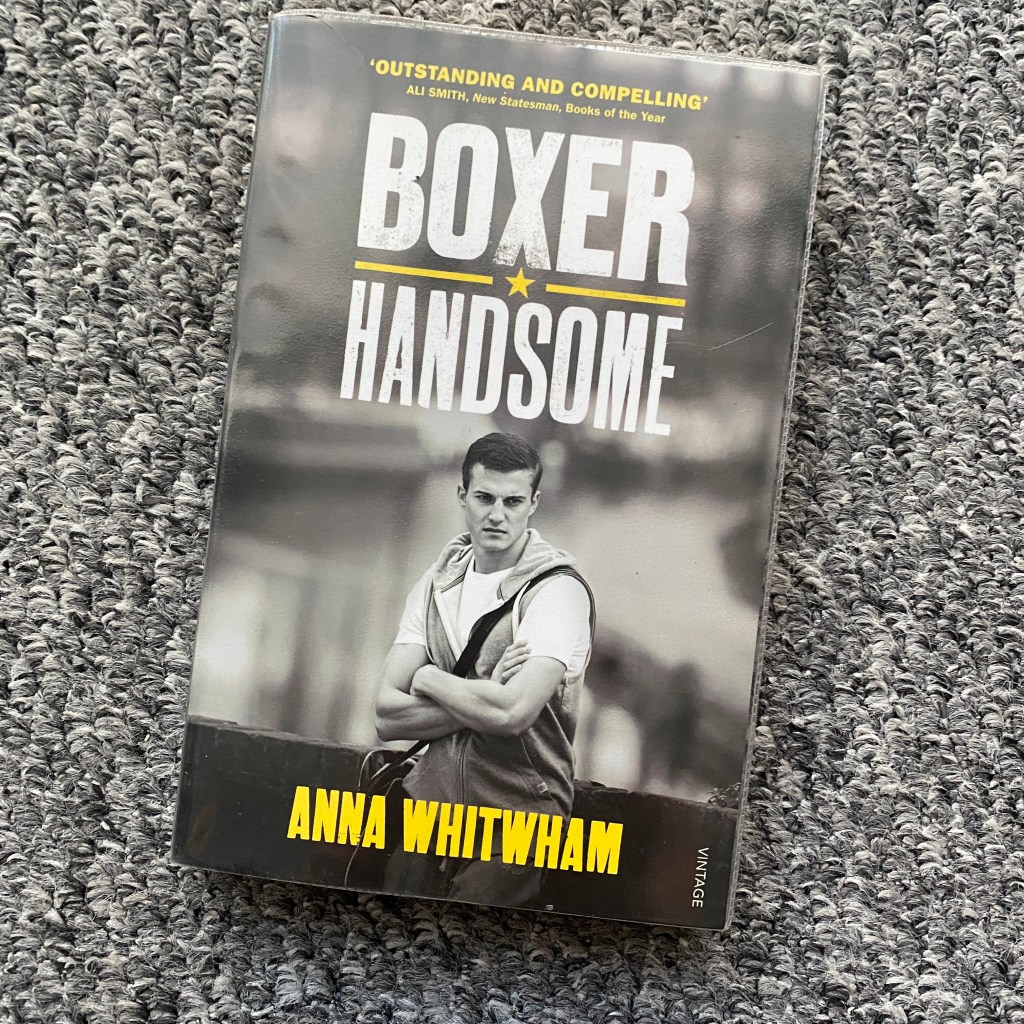
Boxer Handsome is Anna Whitwham’s debut novel and was published by Vintage in 2014.
Whitwham’s grandfather was an amateur featherweight at the Crown and Manor Boy’s Club in Hoxton, east London, and his involvement with the sport was, no doubt, the seed of her own interest in boxing.
The novel revolves around two protagonists: Bobby, of Jewish and Irish descent, and Connor, from the local Irish Traveller community; both from the latest generation of fighting men/boys. The two grew up attending the fictional Clapton Bow Boys Club, where they learned to box; both having learned to fight from their fathers.
With the novel building toward a couple of physical encounters between the boys (particularly their clash in the North East London Divisions amateur finals) Whitwham asks a number of questions about masculinity and violence in British working-class communities, including: if boy-boxers inherit their punch or dig from their fathers and grandfathers, what else do they inherit?
The novel explores how, within tight-knit communities, the sons and daughters born inherit prior dramas and feuds which have played out for generations between older relatives. While Bobby and Connor were naturally drawn together in a regional stage of (what would then have been) the ABA’s, they were already inextricably linked by decades of drunken brawling between their fathers, uncles, cousins and grandfathers.
It seems that the most important question asked in this book is: how do we break these cycles? How do we find the strength to drag ourselves up and out of the social conditions that have held so many of our relatives down? I won’t make any mention here of how the novel seeks to resolve this as to do so would spoil the ending of the story.
I try, on this blog, to not be too critical of books, but the setting of this novel is quite close to my own experience growing up in and around these communities and in social housing. I find it very disappointing that working-class lives are still portrayed as only traumatic and uncomfortable, and while there are many moments of love and tenderness between the characters in this book there is still, in my mind, an unnecessary level of doom hanging over everybody in the book.
This, of course, may be true to Whitwham’s experience and her original artistic vision of the book, and I have no issue with that necessarily. What I do find deeply troubling is the British (and very middle-class) publishing industry’s fascination with working-class trauma-porn, which only serves to prop up the stereotype that British working-class folk have no capacity for joy or laughter. Let’s not forget which communities have traditionally driven innovation in art, music and comedy; it’s not the streets of Tunbridge Wells is it?
One issue I would take up directly with Whitwham is her portrayal of the Irish Traveller community: unfortunately there is no distinction in this book as to whether they are ‘good’ or ‘bad’ people; they seem to be simply underhanded, morally corrupt and untrustworthy because they are travellers. It’s a shame that the author has chosen to be so clumsy in her portrayal of the Travellers in this book as it is a particularly (in)sensitive issue within the boxing community in the UK, with England Boxing attempting to make the amateur code more inclusive and welcoming to all.
One final thing: I seem to, negatively, repeat myself after reading contemporary fiction about boxing, but all too often the books revolve around a plot device which is just so ridiculous as to be almost nonsensical. In the case of Boxer Handsome the plot begins with one of our protagonists having his face slashed, requiring stitches, merely a week before they are due to box in the North East London Division finals. This is such a laughable conceit (there is no way he would be allowed to box with such a fresh wound and stitches) that it was difficult, at times, to concentrate on the rest of the story.
However, I will end on a positive note; the main pitfall of boxing-fiction was avoided: when fights and bouts are described Whitwham avoids any temptation for Rocky-style heroics. There are no descriptions of fighters being bashed about beyond any limits of human endurance (or if they are then there are very real and disturbing consequences). Apart from the face slashing, the writing displays a very good understanding of regional level amateur boxing and the potential issues that can explode when tensions from outside force their way into the gym.
 Writers on Boxing
Leave a comment