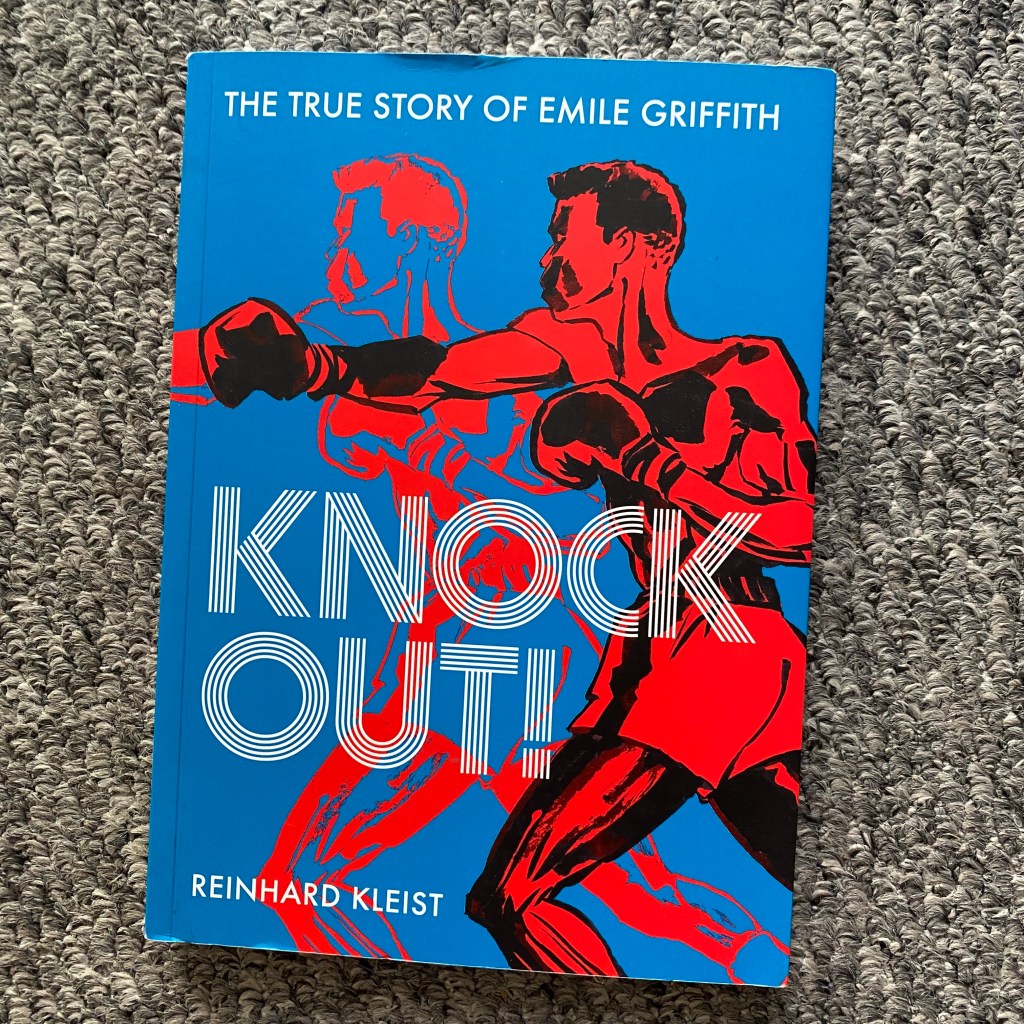
‘Knock Out!’ is a graphic novel written and illustrated by Reinhard Kleist. Kleist also authored ‘The Boxer’, which I have covered previously, in post #11.
Emile Griffith is the boxer I have covered most in this blog and probably the one sports person I’ll never get bored reading, thinking and writing about. I’m sure there will be even more posts about him to come.
This book begins with the author unashamedly stating that this is a very personal response to Emile Griffith’s life, which sets it apart slightly from other works I have read. In his introduction, Kleist reveals how he and his friends have been victims of verbal and physical homophobic abuse, and this in modern Berlin, a city renowned for being a haven for people identifying as Queer. Though, I’ve spent a lot of time in the city so this undercurrent of hostility doesn’t surprise me.
Against this context it’s understandable that the book begins with the violent attack that Griffith suffered later in life, one that doctors said he only survived due to his conditioning as a former professional boxer. The book then looks back on his early career as a hat designer/maker and how his then boss Howard Albert got him into boxing, by introducing him to Gil Clancy.
Although I’ve read a lot about Emile Griffith previously, I don’t think I had realised just how long he continued to design hats for women and how large the overlap was with his professional boxing career.
Of course the book necessarily has to deal with the tragic death of Benny Paret, who died shortly after the pair fought for the welterweight championship of the world in 1962. It is now well-documented how persecuted Griffith felt for being bisexual, and how he could never properly reconcile this with how quickly he seemed to be forgiven for his (perhaps overplayed) role in Paret’s unfortunate death.
The book ends with a very interesting essay by Dr Tatjana Eggeling, putting Griffith’s life and career into context against the backdrop of homophobia and racism that he and other black and/or queer sportspeople faced at the time. The essay also contains several short biographies of lesbian and gay boxers.
 Writers on Boxing
Leave a comment